
Equipment and habits
Sweaty hands in padel
Direct answer
Sweating is not the problem. Losing friction exactly when you need precision is. This guide separates what you can control before the match, during the match, and in your choice of equipment, without pretending any of the three makes sweat disappear.
Marco LucasAURO
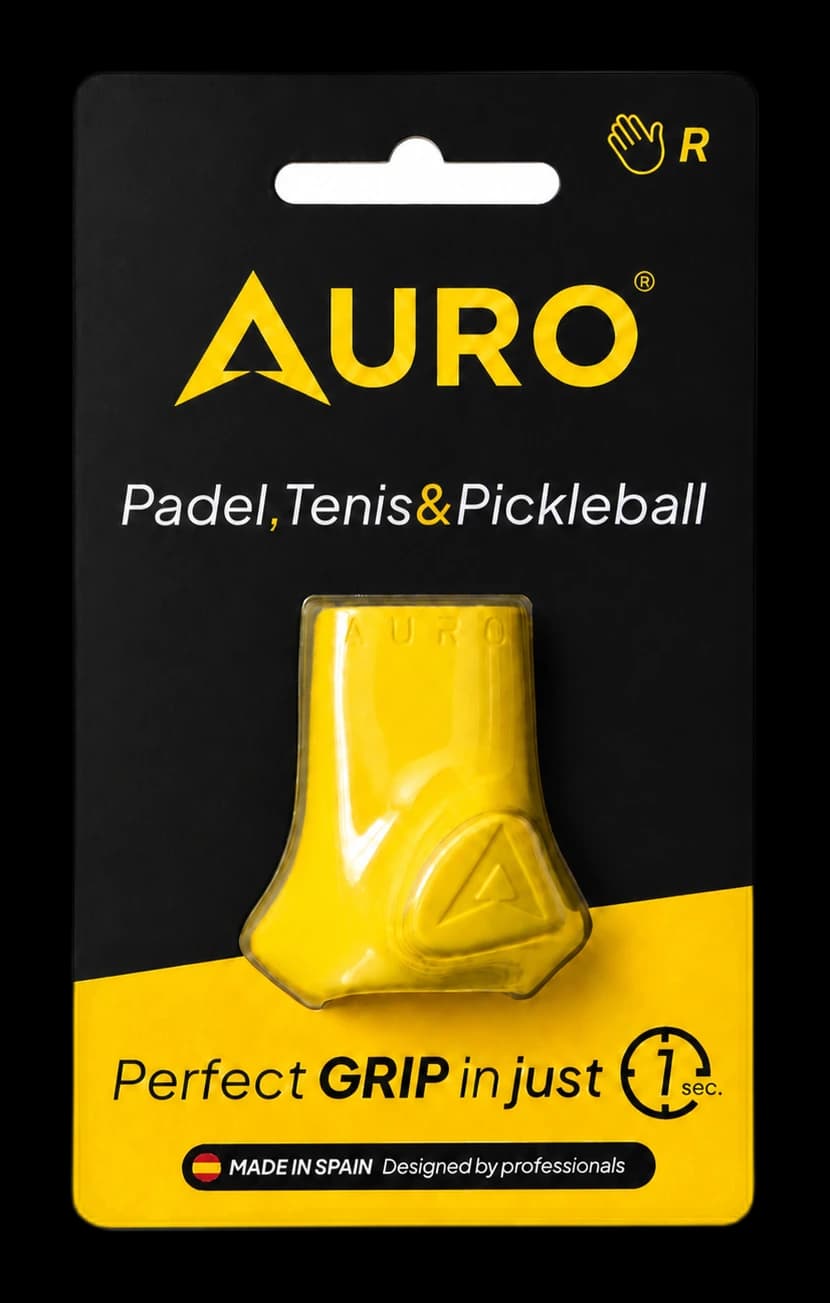
The goal is not to stop sweating
Sweating is what a body does under exertion, and indoors or in summer it will happen. What can be managed is the route that sweat takes to the contact surface, and how quickly that surface stops gripping.
Before you step on court
Arriving with clean, dry hands changes the first two or three games. Residue from hand cream, sunscreen or gel reduces friction from the opening point, and it is an overlooked cause because nobody associates it with equipment.
Where wristbands actually work
Much of the sweat does not start in the palm: it runs down the forearm and reaches the hand at the wrist. That is where a wristband intercepts it. Carrying two pairs and swapping once the first is saturated keeps the effect through a full match.
Smooth or perforated
Perforated overgrips carry small holes that help moisture avoid sitting on the surface. Smooth ones offer a more uniform feel. There is no universally correct answer: heavy sweaters often prefer perforated, but both are worth trying before settling.
Rotate rather than stretch
Keeping a spare overgrip in the bag lets you change mid-match instead of enduring a full set on a saturated surface. Changing in time costs less than playing three games compensating for a hold that no longer responds.
During and between points
Drying at every changeover, keeping the towel within reach and not waiting for the long break all add up more than they appear to. Moisture accumulates progressively, so intervening early and often works better than one late correction.
When this stops being an equipment question
If sweating affects you outside sport as well, that is not resolved by choosing an overgrip and belongs with a medical professional rather than an equipment guide. This page covers only what depends on equipment and on-court habits.
Your bag is part of the system
A small towel, a spare pair of wristbands and at least one unopened overgrip turn a match-ruining problem into a thirty-second errand. Most of the time someone endures a full set with no grip left, it is not a decision — it is that they had nothing with them.
Indoor and outdoor courts behave differently
Outdoors, wind helps evaporate some hand moisture between points. Indoors, especially with poor ventilation, that evaporation is far weaker and moisture accumulates faster. If you play in both, needing different replacement intervals for each is entirely normal.
A plan for a long match
Start with clean dry hands, dry handle and hands at every changeover, swap the saturated wristband at the midpoint, and keep the spare overgrip within reach. It is not a sophisticated list, but it covers the four moments where grip is lost, and running all of it works better than doing only the last step once it is too late.
The mistake of waiting for the long break
Intuition says drying off at the scheduled break is enough, but moisture accumulates continuously, and by the time that moment arrives you have already spent several games compensating. Stepping in at every changeover, even for fifteen seconds and even when it does not feel necessary yet, keeps the surface in a usable range far longer than one late, thorough intervention.
Humid climates and hotter months
On the coast or in high summer, ambient humidity means evaporation between points is minimal, and a setup that works nine months of the year runs out of margin for three. It does not mean something has broken: it means the same surface has less capacity to absorb moisture than it is receiving. Adjusting replacement frequency by season is more sensible than hunting for a product that holds up in any condition.
AURO
Frequently asked questions
Are padel gloves a good idea if I sweat heavily?
They maintain friction even with a wet hand, which is precisely the problem you are trying to solve. The trade-off is some loss of feel through the palm, so the decision depends on how much you value that feedback against grip security.
Is a thin or thick overgrip better for sweaty hands?
Condition matters more than thickness. That said, a very thin overgrip leaves little surface and forgives moisture less, so heavy sweaters often sit more comfortably away from the thinnest end of the range.
Can I wash or dry an overgrip and reuse it?
It is neither common nor usually effective: an overgrip is a consumable and its gripping ability degrades with use, not only with the day's moisture. Once it stops gripping, replacement is the answer.
Does chalk leave residue on the racket?
It leaves a whitish film that builds up on the handle and contact zone. It does not damage the racket, but it is worth cleaning off when you change overgrips so the new wrap bonds to a clean surface.
Does sweating more mean I am less fit?
Not necessarily. Sweating depends on genetics, temperature, hydration and effort level, and is not a reliable fitness indicator. Well-trained people often start sweating sooner because their bodies regulate temperature more efficiently.
Does switching the racket between hands help?
It lets the dominant hand air out for a few seconds, which matters more than it sounds in long matches in heat. It is a minor habit next to drying the handle and rotating overgrips, but it costs nothing to adopt.
Does hydration change anything about grip?
Drinking enough does not reduce sweat, but dehydration affects overall performance and fatigue, and a tired hand grips worse. It is an indirect factor worth respecting even though it does not act on friction.