
Buying criteria
How to choose a grip trainer
Direct answer
Grip trainers all promise the same outcome and reach it in noticeably different ways: some separate the fingers, some sit on a bevel, some fill the palm. This page explains what actually differs between them and which questions decide the choice, without declaring a winner.
Marco LucasAURO
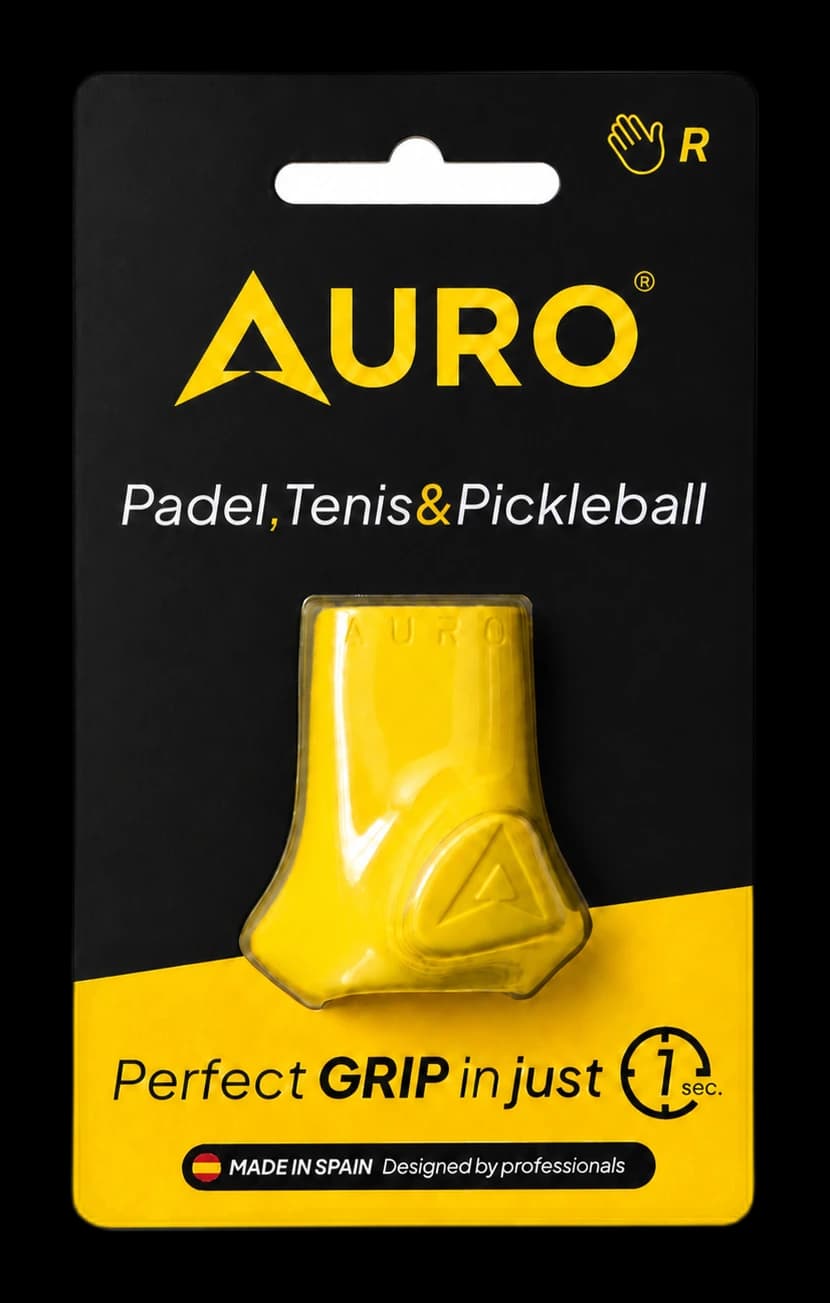
What a grip trainer is
A small piece that attaches to the handle and gives the hand something to feel, so the correct position can be found without looking. The category exists because grips are quick to explain and slow to keep: a coach demonstrates one in seconds and then spends weeks reminding a player of it.
The first question: knowing or keeping
These are different problems with different answers. If you cannot find the position at all, a diagram and five minutes solve it and no purchase is needed. If you find it fine and lose it three games later, that is what a physical reference addresses. Buying for the wrong problem is the most common mistake here.
Where it sits on the handle
Some designs sit between the index and middle finger, some on a specific bevel, some against the heel of the hand. The position determines what you feel and when: a finger separator is noticed continuously, a bevel reference mainly as the hand closes. Neither is better in the abstract; they suit different sensitivities.
Can you play with it on
The practical dividing line. Some trainers are meant for drills and come off before a match; others are designed to stay on during real play. If your grip only fails under pressure, a trainer you remove before competing is addressing the wrong moment.
Does it change the handle size
Anything added to a handle alters its thickness somewhere. Some designs are thin enough that the change is negligible; others noticeably fill the hand. If you have already tuned your handle thickness with overgrip layers, a bulky trainer undoes that work and you will need to re-tune.
One position or several
Some trainers fix a single grip; others let you switch between positions without removing anything. That matters if you change grip between baseline and net, which is common in tennis and rare in pickleball at the kitchen line. Match the tool to how many positions you actually use.
Handedness and sizing
The correct position is a mirror image between right and left-handed players, so a trainer that is not symmetric needs a handed version. Some ranges also come in sizes. Both are easy to get wrong when ordering online, and both make the product useless if wrong.
Which sports it is built for
Padel, tennis, pickleball and platform tennis have different handle profiles and lengths, and a piece designed around one may sit awkwardly on another. Products that claim to fit all of them usually can; it is still worth checking how it sits on the handle you actually own.
When you do not need one
If the racket does not move in your hand, the handle feels comfortable, and your grip is the same at the end of a match as at the start, there is nothing here to buy. Adding equipment to a setup that works has a real cost: for several weeks you play against a reference your hand does not recognise.
How it attaches, and whether that survives play
Some pieces clip onto the handle, some are fitted beneath the outer wrap, some coil around it. The attachment method decides whether it stays put through a sweaty third set or needs adjusting between games. If a trainer moves during play it stops being a reference and becomes a distraction, which is worse than not using one.
Reusable or consumable
Some are single pieces you fit once and keep for years; others degrade along with the wrap beneath them and get replaced at the same time. The difference matters for cost over a season and for whether you can move it between rackets. Ask whether it survives an overgrip change, because that happens every few weeks.
What it does to your existing setup
If you have already tuned handle thickness with layers, adding a trainer usually means re-tuning. Plan for a transition period where the racket feels unfamiliar for reasons unrelated to the grip position itself, and do not judge the trainer during those first sessions.
Whether it teaches one grip or a system
A device that fixes a single position is useful for a player learning one grip and limiting for a player who changes between baseline and net. Tennis players usually need the second; pickleball players at the kitchen line usually do not. Match the tool to how your sport actually plays rather than to what the packaging claims.
Coaches and clubs buy differently
An individual buys one piece for one racket; a coach buys a set that gets fitted and removed repeatedly across many students. Those are different requirements, and products sold in packs of twelve are usually designed for the second case. If you are buying for yourself, a coaching set is the wrong product at the wrong price.
How to judge whether it worked
Not by whether the grip feels correct while wearing it, which it will. Judge by taking it off after several weeks and checking whether the hand still lands in the same place without it. That is the outcome any of these products is actually selling, and it is the only test that distinguishes a reference from a crutch.
What the marketing claims usually leave out
Most of this category is sold on the promise that a correct grip transforms your game. What the packaging rarely mentions is that the device addresses one variable among several: contact surface, handle thickness, preparation and footwork all affect the same symptoms. A trainer that fixes position will not fix a worn overgrip or a late split step.
Buying for a child or a beginner
For someone who has not built a habit yet, the value is in preventing one rather than correcting one, and that argues for starting early and simply. It also argues against overspending: a beginner outgrows sizing, changes rackets, and may leave the sport. Match the outlay to the likelihood the setup lasts.
Questions worth asking before you buy
Does it stay on during matches or come off for drills. Does it survive an overgrip change. Is there a handed version and did you order the right one. Does it fit the handle profile of your sport specifically. Does it fix one position or allow several. Five questions, and the answers narrow the field faster than any comparison table.
AURO
Frequently asked questions
Is a grip trainer only for beginners?
Not necessarily. Beginners tend to have a knowing problem, which is solved by explanation. Experienced players more often have a keeping problem under pressure, which is closer to what a physical reference addresses.
Will it make my handle feel too thick?
It depends on the design. Some are thin enough not to change the feel meaningfully; others add noticeable bulk. If you have already tuned thickness with overgrip layers, expect to re-tune after fitting anything new.
Can I use one during a match?
Some are designed for that and some are drill-only. It is worth checking before buying, because a grip that only fails under match pressure is not helped by a tool you take off before matches.
Do I still need an overgrip with one?
Usually yes. A grip trainer addresses where the hand sits; an overgrip addresses the contact surface and moisture. They solve different problems and most setups use both.
How long should I use it for?
There is no standard period, because it depends on how often you play and how established the old habit is. Many players keep it on well past the point where they think they no longer need it, precisely because drift is invisible while it happens.
Will it fit my paddle or racket?
Handle profiles differ between padel, tennis, pickleball and platform tennis, in both shape and length. Most trainers work across several, but it is worth checking the fit on the specific handle you own rather than assuming.