
Technique
The continental grip in pickleball
Direct answer
The continental is the grip most pickleball instruction starts from, and the one most competitive players hold through fast exchanges. This page explains what it actually is, how to locate it, what it costs you in topspin, and why that trade is worth making at the non-volley line.
Marco LucasAURO
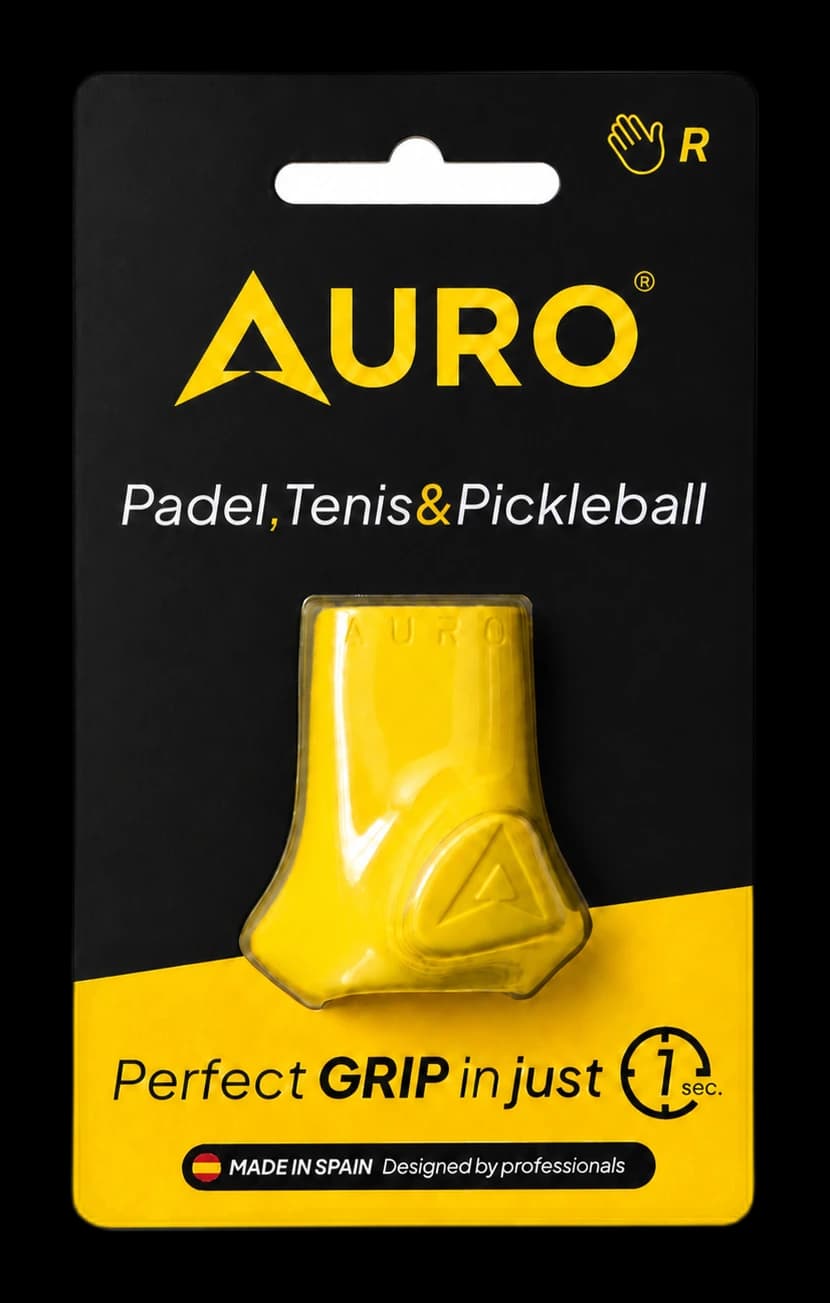
What the grip actually is
The hand sits in a neutral position, rotated neither towards the forehand side nor away from it, which leaves the paddle face close to perpendicular to the ground without any wrist effort. It is described as the hammer grip or the handshake grip because both gestures put the hand in roughly the same place.
Finding it on the bevels
Paddle handles are octagonal, and each flat face is called a bevel. The standard reference places the base knuckle of the index finger on a specific bevel, with the V formed between thumb and index pointing along the edge of the paddle. Checking it means looking at your hand, which is fine before a point and useless during one.
Why it dominates at the kitchen line
Fast exchanges at the non-volley zone leave no time to change grip between a forehand block and a backhand counter. A neutral position meets both without resetting, and on blocks it keeps the paddle face closed enough that the ball does not pop up. That single property explains most of its popularity.
What you give up
Topspin. With the hand neutral rather than rotated under the handle, generating the upward brush that creates heavy spin is harder than with an eastern or western grip. Players who rely on dipping drives from the baseline often rotate slightly for those shots and return to neutral at the net.
It slightly favours the backhand
With the V of the hand sitting on top of the handle, the paddle face arrives marginally more closed on the backhand side and marginally more open on the forehand. That is why forehand volleys sometimes feel less natural at first, and why footwork and body rotation matter more on that wing.
There is no official correct grip
Players arrive at pickleball from tennis, badminton, table tennis and squash, and each background brings a different default. What is described as correct in one guide is a starting reference, not a rule, and plenty of strong players deviate from it deliberately on specific shots.
The hard part is not learning it
Almost anyone can find the continental position in thirty seconds with a diagram. The difficulty is returning to it point after point once attention goes to the ball, especially under pressure, where the hand reverts to whatever position it has held longest.
How to tell whether yours is drifting
Compare between points rather than during them: drop the arm, release the paddle, take hold again without looking, and see whether the position matches how the session started. A gradual drift is far more common than an outright wrong grip, and it is invisible while it happens.
How it behaves on the dink
The soft exchange over the net is where the continental earns its place. A neutral face with the hand relaxed lets you absorb pace and drop the ball short without manipulating the wrist, which is exactly what a rotated grip forces you to do. Most unforced errors in dink rallies come from tension and face angle rather than from technique, and a neutral position minimises both.
How it behaves on the drive
This is where the trade shows. A drive hit from a neutral hand travels flatter and with less margin over the net than one hit with the hand rotated under the handle. Players who rely on heavy dipping drives usually rotate slightly for that shot and return to neutral before the exchange starts, which is feasible because a drive gives you more time than a block.
The serve and the return
Pickleball serves are underhand and below the waist, which suits a neutral hand naturally. The return matters more: it is often the last comfortable shot before the fast phase, and arriving at the kitchen with the grip already where it needs to be saves a change you will not have time for once the exchange begins.
Coming from tennis, badminton or table tennis
Each background brings a different default. Tennis players arrive with an automated grip change; badminton players with a much looser wrist and a lighter implement; table tennis players with an extended index finger and very fine face control. None of these is wrong, but each collides with the neutral position differently, and knowing which one you carry makes the adjustment faster.
Why coaches teach it before anything else
Not because it is optimal for every shot, but because it is the position from which the fewest shots are impossible. A player who holds neutral can hit every shot in the game adequately; a player who holds a western grip cannot volley or block comfortably at all. Teaching starts from breadth and narrows later.
The practical test
Play a few points deliberately holding only the neutral position, including on drives where you would normally rotate. If your dinks and blocks improve and only your drives suffer, the grip is not your problem and you are simply trading spin for consistency. If everything feels worse, the position you have found is probably not the one being described.
What changes as you move up levels
At beginner level almost any grip survives, because the ball arrives slowly enough to correct. As pace rises the window closes, and the grip you hold at the start of the exchange is the one you finish with. That is why players often report their grip getting worse as they improve: it did not change, the game stopped forgiving it.
Equipment that makes it harder
A handle too thin for your hand encourages rotation because you squeeze to compensate. A worn overgrip does the same by letting the paddle turn. Before concluding that a grip habit is the problem, rule out the two cheapest causes, because both produce exactly the same symptom and cost far less to fix.
How long to give it
There is no standard period, and anyone quoting one is guessing. What is consistent is the shape: an initial phase where the position feels wrong on every shot, a middle phase where it holds in practice and collapses under pressure, and a later phase where you stop noticing it. Judging the change during the second phase is the common mistake.
On the third shot drop
The third shot drop asks for a soft, arcing ball landing in the kitchen, and it is where a neutral hand pays most obviously. The face stays open enough to lift the ball without the wrist doing the work, and the low grip pressure that suits a neutral hold is exactly what a drop needs. Players who hit third shots with a rotated hand tend to drive them by accident, because the face wants to close.
In the transition zone
Moving from baseline to kitchen is the most awkward stretch of any point: you are hitting on the move, often from below net height, and you have no time to reorganise the hand. Arriving at the transition with the grip already neutral removes one variable from the hardest moment of the rally, which is more valuable than any advantage a rotated grip offers on the drive you just hit.
On the return of serve
The return is usually the last comfortable shot before the fast phase begins. Whatever position your hand is in when you finish that return is the one you will carry into the exchange, because there is no gap afterwards to change it. Treating the return as the moment to set the grip, rather than the moment to hit hardest, is a habit stronger players tend to have.
Against a hard driver
When the ball arrives fast at the kitchen, the paddle has to arrive already correct. A neutral face blocks and resets without popping the ball up, which is the whole objective in that situation. This is the scenario that explains the grip better than any diagram: there is no time to be right after the fact, only before.
Errors that come from the grip and errors that do not
Balls that pop up off blocks usually trace back to an open face or excess pressure, both of which the grip touches. Balls that go long on drives usually trace back to contact point and swing path, which it does not. Attributing every error to the grip is as unhelpful as ignoring it, and the useful question is always which of the two the pattern points to.
How it interacts with paddle shape
Elongated paddles put the sweet spot further from the hand, which magnifies any face angle error, so a drifting grip shows up sooner on them than on a wider shape. That is worth knowing if you have recently changed paddle and your dinks have become erratic: the grip may not have changed at all, only how much the paddle reveals it.
What changes when you play indoors
Indoor balls are generally softer and slower, which forgives a face that is slightly off and hides a drifting grip. Players who train indoors and compete outdoors sometimes find their consistency drops without knowing why, and grip drift that the indoor ball absorbed is one of the plausible explanations worth checking before technique.
A drill that isolates it
Dink cross-court for five minutes without letting the hand leave the neutral position, even on balls you would normally rotate for. Count how many exchanges you complete before the position shifts. The number is less important than the discovery, which is usually that it shifts far sooner than expected and always at the same kind of ball.
Why it is taught before anything else
Not because it is optimal everywhere, but because it is the position from which the fewest shots become impossible. A player holding neutral can hit everything in the game adequately; a player holding western cannot volley at all. Teaching starts from breadth and narrows later, and that sequencing is the whole reason this grip is the default.
AURO
Frequently asked questions
Is the continental grip the same in tennis and pickleball?
The hand position is described the same way in both, and players moving between the sports usually recognise it immediately. What differs is how much time you have to leave it and come back, which is far less in pickleball.
Do professional pickleball players use it?
It is widely reported as the most common grip at the top level, mainly because of how quickly it lets players switch between forehand and backhand at the net. Some rotate for specific baseline shots and return to it for the exchange.
Why does my forehand volley feel awkward with it?
Because the neutral hand position leaves the paddle face slightly more open on that side. Most people compensate with footwork and shoulder rotation rather than by changing the grip, since changing it costs time they do not have at the net.
Can I get topspin with a continental grip?
Some, but noticeably less than with grips that rotate the hand under the handle. Players who want heavy topspin drives usually accept a small grip change for that shot rather than trying to force spin from a neutral position.
How long does it take to feel natural?
It depends on how much you play and how deliberately you work on it. What is common is a middle phase where the correct position feels strange and the old one feels natural, precisely because the old one is automated.
Does a two-handed backhand change anything?
The dominant hand still sets the paddle face, so the reference position applies the same way. What changes is how much handle length you need free for the second hand, which is a paddle choice rather than a grip one.
Is the continental grip good for the third shot drop?
It is the position most third shot instruction starts from, because the face stays open enough to lift the ball without the wrist doing the work, and the low pressure that suits a neutral hold is what a drop needs.
Why do my blocks keep popping up?
Balls popping up off blocks usually trace to an open face or excess grip pressure, and a neutral hand addresses both. If it persists with the grip correct, the next thing to look at is contact point rather than the hand.
Does it work with an elongated paddle?
The position is the same, but an elongated shape places the sweet spot further from the hand and so magnifies any face angle error. A drifting grip shows up sooner on that shape, which some players read as the paddle being harder to control.
Should I use it on the serve?
The pickleball serve is underhand and below waist height, which suits a neutral hand naturally. Most instruction places it there, though it matters less than on shots where you have no time to change.
My dinks are worse indoors than outdoors, or the reverse. Why?
Indoor balls are generally softer and slower, which forgives a face that is slightly off and can hide a drifting grip. If consistency changes between the two settings, grip drift that one ball absorbs and the other exposes is worth ruling out before technique.
How do I practise holding it without a partner?
Take the paddle, close your eyes, release it completely, take hold again without looking, and check whether your hand landed in the same place. Repeat five or six times. It needs no ball and no court, and it tests the exact thing that fails in matches.