
Fundamentals
How to hold a pickleball paddle
Direct answer
Most players pick up a paddle the way they would pick up a frying pan, and it works well enough until the pace rises at the non-volley line. This guide covers the three grips people actually use, how to locate each on the handle, and how to tell which one you are holding without thinking about it.
Marco LucasAURO
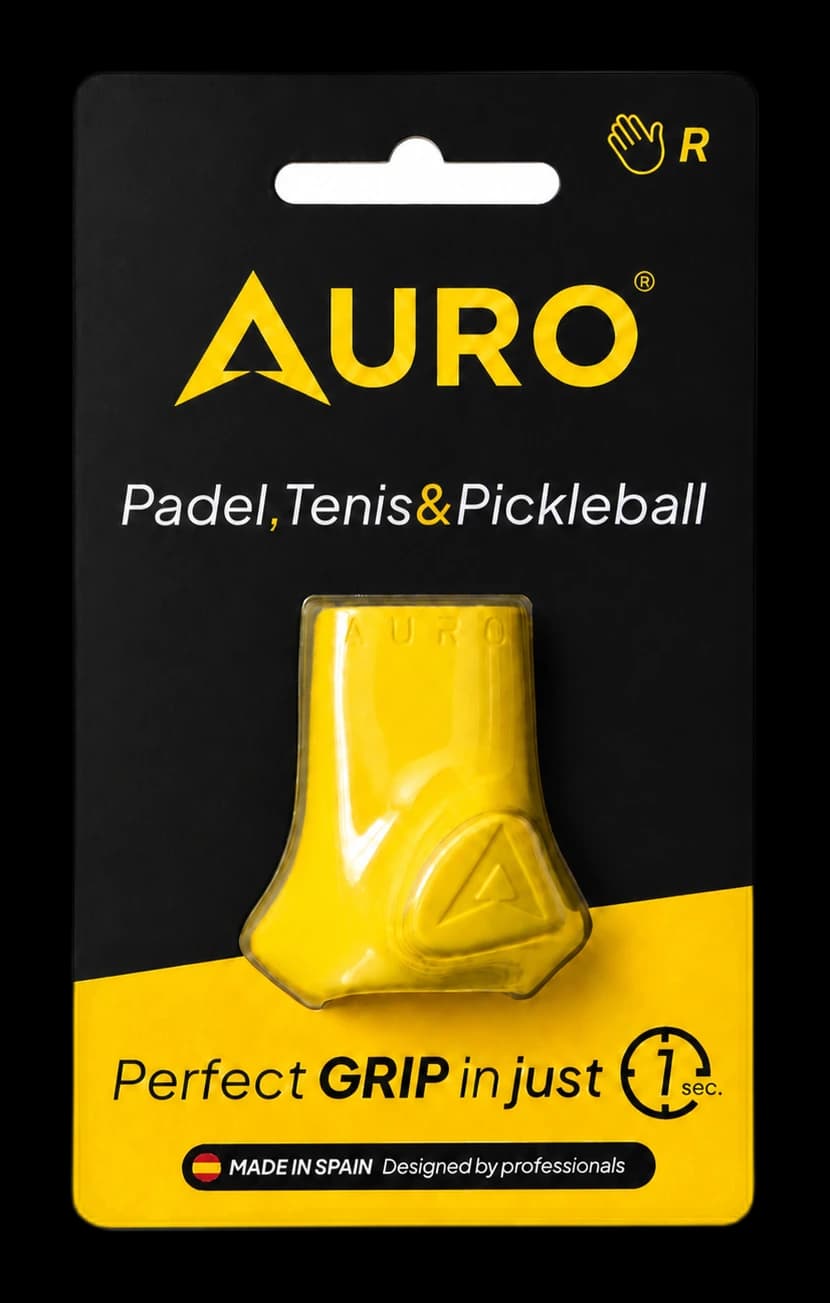
Start with the handshake
The most repeated instruction on any court is to hold the paddle as if shaking hands with it, or as if holding a hammer. Both images point at the same position: the hand neither rotated up nor down, with the paddle face close to perpendicular to the ground. It is the reference nearly every coach starts from.
The three grips you will hear about
Continental, the handshake position, sits in the middle and is what most players use. Eastern rotates the hand slightly towards the forehand side and favours drives. Western rotates further still and generates topspin at the cost of a much harder backhand. None is objectively correct: they trade the same qualities in different proportions.
Finding the position on the handle
Handles have flat sides called bevels. The usual reference for the continental is the base knuckle of the index finger resting on a specific bevel, checked by looking at where the V between thumb and index points. It works, but it requires looking at your hand — which is exactly what you cannot do mid-rally.
How firmly to hold
Firmly enough that the paddle does not move, and no more. Squeezing harder is the most common reflex when a ball comes fast, and it reduces feel precisely when feel matters most. At the non-volley line, where touch decides points, excess pressure sends the ball long more often than a technical error does.
Where the hand sits along the handle
Choking up towards the paddle face gives more control and less reach; sliding down towards the butt does the opposite. Neither is wrong, but drifting between the two without noticing means your effective paddle length changes shot to shot, and so does your timing.
Why it slips under pressure
In fast exchanges the hand drifts towards whatever position feels most familiar, usually the one carried over from tennis or from years of holding things flat. It is not a concentration failure: an automated position costs less attention than one still being learned, and pressure spends attention.
What players coming from tennis carry over
Tennis rewards changing grip between forehand and backhand because there is time between baseline strokes. Pickleball at the kitchen line does not give you that time. The difficulty is rarely learning something new — it is unlearning a switch that already happens without thinking.
Checking it without a coach
Between points, drop your arm, release the paddle completely, take hold again without looking, and compare with how it felt at the start. If the sensation has changed, the hand drifted during play. That is a far more common pattern than holding it wrongly from the first point.
Grip size and why it matters more than it sounds
Paddle handles come in different circumferences, and a handle too small for your hand forces you to squeeze constantly to keep it still, while one too large stops you closing the hand fully. Both push you towards the same symptom: tension. Before changing technique, check whether you can close your hand comfortably around the handle without gripping hard, and add or remove overgrip layers until you can.
The index finger question
Some players extend the index finger up the back of the paddle face for extra control on dinks, the way some table tennis players do. It gives a little more feel and costs stability on hard drives, and it is a genuine preference rather than an error. What matters is being consistent: switching between extended and wrapped mid-rally changes where the paddle balances in your hand.
Two-handed backhands change the equation
If you use a two-handed backhand, the dominant hand still sets the paddle face and the reference position applies unchanged. What changes is how much free handle you need for the second hand, which makes handle length a real consideration when choosing a paddle. Players who came from tennis with a two-handed backhand often find standard pickleball handles short.
What changes between singles and doubles
Doubles concentrates play at the non-volley line, where exchanges are fast and grip changes are impractical. Singles has more baseline movement and more time between shots, which makes small grip adjustments feasible in a way they are not at the kitchen. If you play both, expect your habits from one to feel wrong in the other for the first few games.
The warm-up is where the grip is set
How you pick the paddle up during the knock-up tends to set the reference your hand uses for the rest of the session. Spending the first two minutes placing it deliberately, rather than grabbing it while talking to your partner, is one of the cheapest interventions available in the sport, and almost nobody does it.
Filming yourself beats guessing
Thirty seconds of phone footage from the side shows things you cannot perceive while playing: whether your hand is in the same place on the first shot and the twentieth, whether it drifts under pressure, whether your preparation arrives late. It does not replace a coach, but it turns vague impressions into something specific enough to work on.
Common mistakes that look like technique problems
Holding too far down the handle so the paddle feels heavy, letting the hand rotate flat after a hard shot and never resetting, and squeezing through an entire rally instead of only at contact. All three get diagnosed as technique and none of them is: they are hand-position habits, and they respond to attention rather than to drills.
What to do in the first ten minutes on court
Set the grip deliberately before the first ball, check it once after the warm-up ends, and check it again after the first game. Those three moments cost nothing and cover the window where drift usually starts. Most players never check at all, and then correct mid-match when it is far harder.
When to ask a coach instead of reading
If you have set the position deliberately, checked it between points, and the paddle still arrives wrong on specific shots, the issue is likely in preparation or footwork rather than in the hand. That is visible from outside the point and invisible from inside it, which is exactly what an hour with a coach is for.
The eastern grip, in detail
Rotating the hand slightly towards the forehand side from neutral produces what is usually called the eastern grip. It puts more of the palm behind the paddle at contact, which suits driving the ball flat and hard from the baseline. The cost appears the moment a backhand arrives: the face is now slightly closed on that side, and without time to rotate back you are blocking rather than hitting. Players who drive a lot often live here and accept the backhand compromise.
The western grip, and why it is rare here
Rotating further still puts the hand well under the handle and opens up heavy topspin, which is why the grip is common in tennis baseline play. In pickleball it is unusual, because the ball is lighter, the court is shorter and the sport is decided at the non-volley line where a western grip cannot volley or block comfortably at all. Some players use it deliberately for specific drives and return to neutral immediately after.
Which grip suits which shot
Dinks, resets and blocks favour a neutral hand, because the face arrives closed enough that the ball does not pop up. Drives and topspin rolls favour a rotated hand, because the brushing action needs the hand under the handle. Serves and overheads sit between the two. The practical consequence is that no single grip is optimal for every shot, and every player is choosing which compromise to accept.
Can you change grip mid-rally
At the baseline, yes: a drive gives you enough time to rotate and rotate back. At the kitchen line, effectively no. The exchange is too fast, and a player attempting it arrives late with the paddle in an intermediate position that suits nothing. That asymmetry is the single most important practical fact about grips in this sport, and it is why coaching converges on holding one position at the net.
Building the habit off court
Take the paddle, close your eyes, release it completely, take hold again, and check whether your hand landed in the same place. Repeat five or six times. It costs two minutes, needs no ball and no court, and it is the only part of this that can genuinely be practised at home. Most people discover the position varies more than they expected.
Building the habit on court
Set the grip deliberately before the first ball of the warm-up rather than grabbing the paddle while talking. Check it once at the end of the warm-up and once after the first game. Those three moments cover the window where drift usually starts, and they cost nothing. Correcting mid-match, once the habit has already reasserted itself, is much harder.
What to do when you notice it slipping
Do not try to fix it during the point. Attention spent on your hand is attention not spent on the ball, and the correction rarely survives the next shot anyway. Wait for the gap between points, reset deliberately, and continue. The repetition of resetting is what builds the habit, not the intensity of any single correction.
When the problem is not the grip
If the paddle turns in your hand rather than your hand turning on the paddle, that is friction, not position: check the wrap and the handle circumference first. If the ball goes off target while the paddle stays put, that is more likely contact point or footwork. Grips get blamed for a lot of things they do not cause, and ruling out the cheap explanations first saves rebuilding something that was not broken.
AURO
Frequently asked questions
Which grip should a beginner start with?
Most coaching material starts from the continental, because it lets you meet forehands, backhands and volleys without resetting the hand. Some players later adjust for specific shots, but it is the usual starting reference rather than a rule.
Should I change grip between forehand and backhand?
At the non-volley line there is rarely time. Players who come from tennis often try, and most settle on holding one position for the fast exchanges and adjusting only on slower shots from the baseline.
How do I know if I am squeezing too hard?
The forearm tells you first: if it tires during short rallies or feels tight when you finish playing, you are probably holding firmly throughout the point rather than only at contact.
Does paddle handle length change how I hold it?
It changes how much room you have to slide up or down and whether a two-handed backhand is comfortable. It does not change where the hand sits rotationally, which is what the grip names refer to.
Can I practise this away from the court?
Yes, and it is one of the few things that transfers well. Taking and releasing the paddle repeatedly without looking, checking whether your hand lands in the same place, needs no ball and takes two minutes.
Do grip trainers actually help?
They give the hand something to feel rather than something to look at, which is the practical difference. Whether that helps depends on whether your problem is not knowing the position or not returning to it consistently.
What is the difference between grip and grip size?
Grip refers to where your hand sits rotationally on the handle, which is what continental, eastern and western describe. Grip size is the circumference of the handle in inches. They are unrelated specifications and both can be wrong independently of each other.
Do I hold a pickleball paddle like a tennis racquet?
The hand position is described similarly, but the pace of the sport is not. Tennis gives you time between baseline shots to change grip; pickleball at the kitchen line does not, so a habit that works in one becomes a liability in the other.
Should my index finger go up the paddle face?
Some players extend it for extra feel on soft shots, the way some table tennis players do. It trades stability on hard drives for touch, and it is a legitimate preference rather than an error. What matters is not switching mid-rally, because it changes where the paddle balances.
How do I stop my grip changing during a game?
Reset between points rather than during them, and check at three specific moments: before the warm-up starts, when it ends, and after the first game. Those cover the window where drift usually begins, and correcting early is far easier than correcting once the habit has reasserted itself.
Does paddle shape change how I should hold it?
It changes how much a small error shows. Elongated paddles place the sweet spot further from the hand, which magnifies any face angle mistake, so the same drifting grip produces more visible errors than on a wider shape.
Is there an official correct way to hold a paddle?
No governing body prescribes one. Coaching converges on the continental as a starting reference because it makes the fewest shots impossible, but plenty of strong players deviate deliberately on specific strokes.