
Technique
The continental grip in tennis
Direct answer
Almost every tennis player is told to learn the continental grip, and almost every beginner resists it, because the natural way to pick up a racquet is a forehand grip and the continental feels wrong at first. This page covers which strokes actually depend on it and why the discomfort is temporary.
Marco LucasAURO
The grip almost nothing else replaces
Serves with spin, volleys, overheads, slices and drop shots are all commonly taught from the continental. That is an unusually long list for one hand position, and it is why coaches insist on it even when a player is comfortable hitting groundstrokes another way.
Why beginners resist it
The instinctive way to pick up a racquet is with the palm behind the handle, which produces a forehand grip. That grip works immediately for one stroke and poorly for everything else. The continental works adequately for many strokes and feels unnatural for all of them at first, which is a hard trade to accept early on.
Finding the position
The usual references are the hammer image, holding the racquet as if driving a nail with the edge, or resting the racquet on edge across an open palm and closing the hand from there. Both put the hand in roughly the same place without needing to count bevels.
Serve is where it matters most
A flat serve can be hit with a forehand grip, and many self-taught players do exactly that. Spin cannot: the brushing action that produces slice and kick depends on the hand being able to pronate freely, which the continental allows and a forehand grip physically restricts.
Groundstrokes are the exception
The modern baseline game largely uses more closed grips for topspin drives, so a player who holds continental for everything gives up spin on rally balls. In practice most players change grip between baseline exchanges and net play, which tennis allows because there is time between groundstrokes.
Where players lose it
The grip usually survives in practice and collapses under pressure, because a hand position still being learned costs attention that a tight point does not leave spare. That is why a serve that works in the warm-up can revert to a flatter, less reliable action at deuce.
The teaching problem it creates
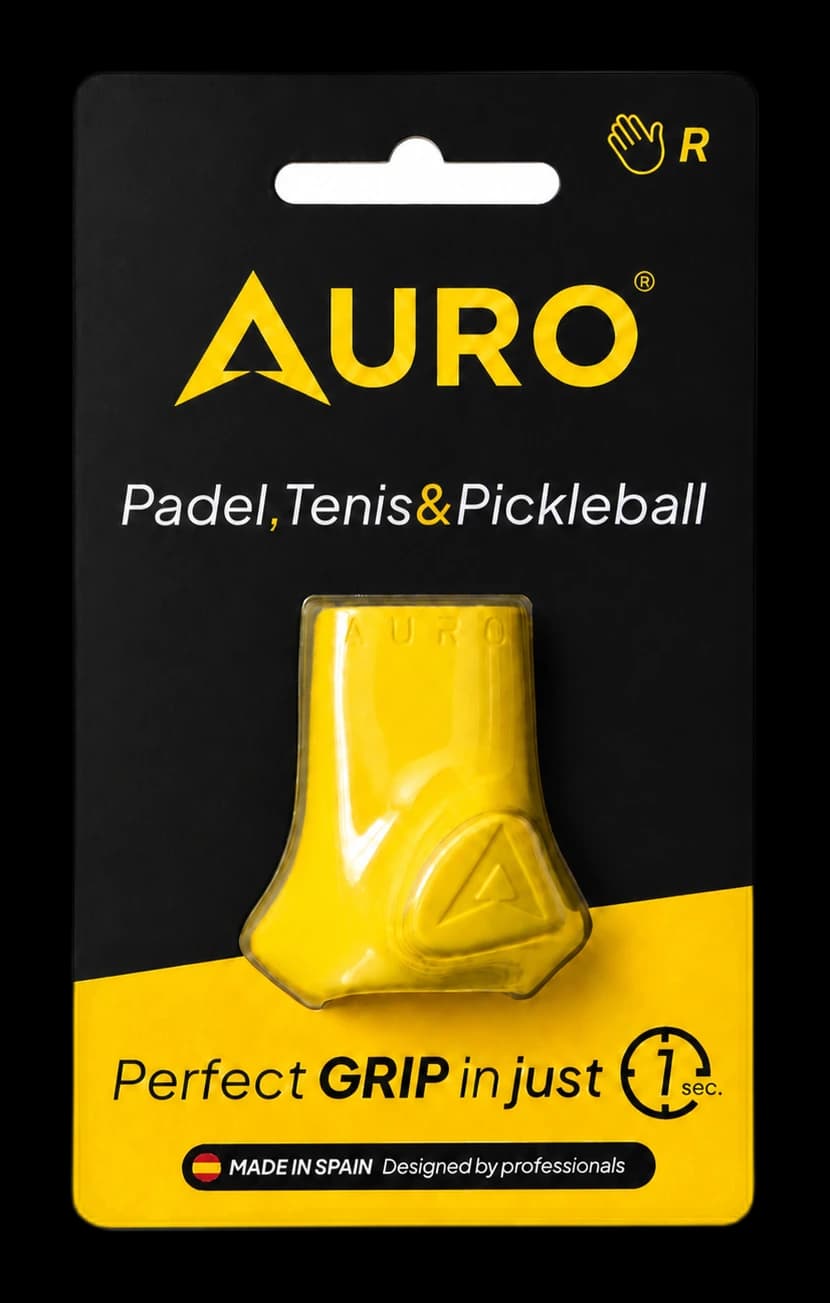
The reason grip training aids exist at all is that this position is easy to explain and hard to keep. A coach can demonstrate it in seconds and then spend weeks reminding a player of it every few minutes, which is slow for both of them.
Checking your own
Between points, drop the arm, release the racquet completely and take hold again without looking. If the position you land on has drifted from the start of the session, the grip is slipping gradually rather than being wrong outright, which is the more common failure by far.
The volley is the second reason
At the net there is no time to change grip between a forehand and a backhand volley, and the continental meets both without adjustment. It also arrives with the face slightly open, which is what produces the underspin that keeps a volley low and stops it sitting up. A forehand grip closes the face and turns volleys into blocked drives.
Slice and the drop shot
Both depend on cutting under the ball, which needs an open face that the hand can present without contorting the wrist. The continental gives that naturally. Players who cannot slice comfortably are often not missing a technique so much as attempting it from a grip that makes the required face angle physically awkward.
The overhead
The overhead is a serve motion without the toss, so it inherits the same requirement: the hand must be able to pronate through contact. From a forehand grip the arm compensates by muscling the ball, which works at low pace and falls apart when a lob arrives deep with the sun in your eyes.
Changing between baseline and net
Most club players hold a closed grip for groundstrokes and continental at the net, and the change happens during the approach. That transition is where it breaks down: if the grip changes only when you remember, the first volley of every approach is hit from whatever the baseline left in your hand.
Why it is worse under pressure
Grip position is one of the first things attention drops when a point matters, because a position still being learned costs conscious effort and a familiar one does not. That is why a second serve at deuce reverts to a flatter, safer-feeling action, and why the fix is repetition rather than instruction.
What a coach can see and you cannot
From behind the baseline it is obvious whether the hand changes on the approach and whether it holds through the point. From inside the point it is invisible, because your attention is on the ball. A single session focused only on that usually returns more than several on general technique.
Junior players and why it is taught early
Coaches push the continental early precisely because it is harder to adopt later: a player who has spent years serving with a forehand grip has an automated motion to unlearn, not just a position to learn. Some junior racquets are built with handles that make the forehand grip uncomfortable, which is the same idea implemented in the equipment.
The self-taught pattern
Players who learn without coaching almost always arrive at a forehand grip for the serve, because it produces immediate contact and a flat ball that goes in. It works up to a level and then stops: without pronation there is no reliable second serve, and the ceiling arrives suddenly rather than gradually.
Equipment can hide the problem
A handle too small encourages the hand to rotate to compensate, and a worn overgrip lets the racquet turn on contact. Both produce symptoms that look like a grip habit. Ruling them out costs one overgrip and five minutes, which is worth doing before rebuilding a serve that may not be broken.
AURO
Frequently asked questions
Do I need the continental grip to serve?
Not to make contact, but to hit with spin. Slice and kick serves depend on a brushing action across the ball that a forehand grip restricts, which is why almost all serve instruction starts from the continental.
Should I use it for forehands too?
Most modern players do not. The baseline game favours more closed grips for topspin, and tennis usually gives you enough time between groundstrokes to change and change back for net play.
Why does it feel so uncomfortable at first?
Because the instinctive way to hold a racquet is a forehand grip, which feels correct immediately for one stroke. The continental feels wrong for every stroke at the start and adequate for many of them later, so the discomfort comes before the benefit.
How long until it becomes automatic?
It varies with how much you play and how deliberately you work on it. What is consistent is the middle phase: for a while the correct grip feels strange and the old one feels natural, because the old one is automated and the new one is not.
Does it work the same for left-handed players?
The description is symmetric, though most teaching material is written from a right-handed perspective, so left-handers usually have to translate the references mentally. The position itself is the mirror image.
Do tennis grip trainers help with this?
They give the hand a physical reference instead of a visual one, which addresses the specific problem of keeping a grip rather than knowing it. Whether that helps depends on which of the two is actually your issue.