
Diagnosis
Why am I not improving at padel?
Direct answer
Not improving even though you train usually comes from a combination: practice without a specific goal, feedback that arrives too late, basic errors that change between strokes, excess tension, and difficulty repeating the same starting position. The grip is one of the first things worth checking, not the only cause.
Marco LucasAURO
It is rarely a single cause
Plateaus in padel usually come from several small factors stacking up at once, not one dramatic mistake. Isolating which ones apply to you matters more than looking for a single fix.
Practice without a specific goal
Playing matches or drilling without a clear focus for that session makes it hard to notice what actually changed. A session aimed at one specific thing — grip, footwork, one shot — gives you something concrete to check afterwards.
Feedback that arrives too late
If corrections only come from a coach once a week, or from noticing a pattern after the fact, the gap between the mistake and the correction slows progress. Checking your own basics — like the grip you start from — between sessions closes part of that gap.
A starting position that changes between strokes
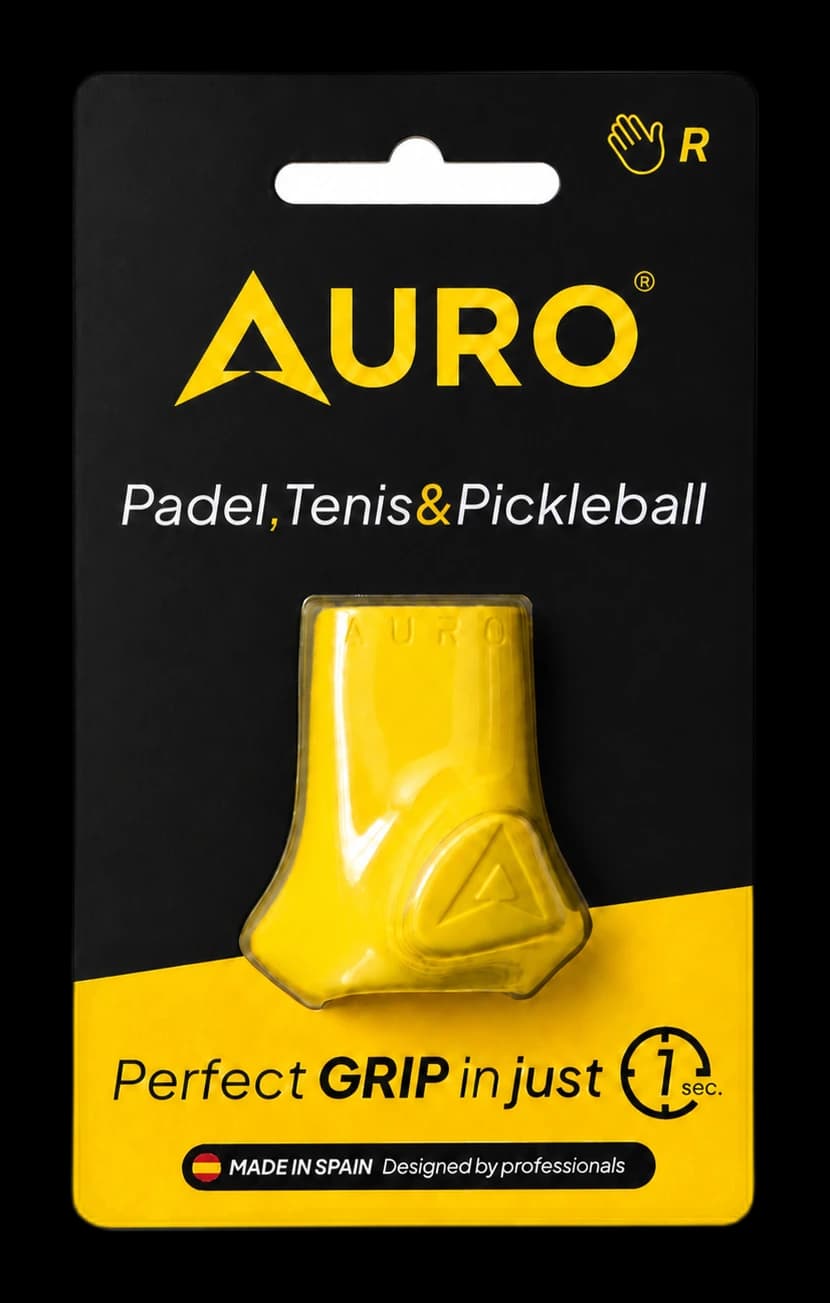
Auro Grip is a physical guide that helps your hand find the continental grip on a padel racket handle. If your hand position drifts between a forehand, a backhand and a volley, every stroke needs its own last-second correction instead of building from one stable base.
Excess tension
Gripping the handle too tightly reduces feel and racket control, and tends to increase with fatigue or pressure in close points.
What this does not mean
None of this promises faster progress or replaces practice, coaching and match time. Reviewing the grip is one of the first things worth checking — not a substitute for the rest.
A plateau is not always a plateau
Feeling worse right after introducing a technical change is common, because the old motion was automated and the new one is not yet. Results can dip during that window even when the change is correct. Mistaking that phase for a plateau leads people to abandon changes that were heading in the right direction before giving them time.
Playing a lot is not the same as practising
Matches consolidate what you already do, because under competition you fall back on what comes naturally. Deliberate practice, with a specific focus and room to fail, is what introduces change. People who only play matches often improve to a point and then hold steady, without that indicating any lack of ability.
Opponent level matters more than it seems
Always playing well below your level lets you win without solving anything new; always playing well above leaves so little margin that there is no chance to apply what you are working on. The useful zone tends to be matches where the result is not decided in advance, where demanding but manageable situations appear.
What you can measure without a coach
Filming a few minutes on a phone from the side yields more information than people expect, especially about starting position and preparation, which are impossible to perceive while playing. It does not replace an expert eye, but it turns vague impressions into something concrete to decide on.
Progress is not linear and that misleads
Improvement usually arrives in steps, with periods of rapid gain followed by long plateaus where nothing seems to happen. During those plateaus what was learned earlier is often consolidating, even without visible results. Reading them as failure leads people to switch approach exactly when the previous one was about to settle.
Compare against yourself, not the next court
It is easy to measure progress by wins and losses, but results also depend on the level of opponents and partners, which changes weekly. A more useful reference is asking whether you now resolve situations you could not six months ago, regardless of how the score ended up.
AURO
Frequently asked questions
Is the grip usually the main cause?
Not always, but it is one of the first things worth checking because it affects every stroke and is easy to overlook once it becomes a habit.
Can a physical reference help with a starting position?
Auro Grip is a physical guide that helps your hand find the continental grip on a padel racket handle.
Will fixing the grip make me improve for sure?
No. It is one factor among several — practice, feedback and match time still matter.
How long is it normal to plateau?
There is no reference figure, because it depends on how much you play, who with, and whether you are working on anything specific. What is common is that stretches without apparent progress coincide with phases of many matches and little practice.
Should I change racket if I am not improving?
It is rarely the cause, and it tends to be one of the most expensive decisions taken for this reason. Rule out cheaper and likelier things first: the condition of your contact surface, the consistency of your starting point, and the kind of practice you are doing.
Are lessons worth it if I already play a lot?
Playing a lot tends to make them more valuable, not less. Anyone with many match hours has consolidated automatic patterns, and an outside eye is what identifies which are worth keeping and which are limiting progress.
Does improving at padel depend on age?
Age affects physical aspects, but the technical and tactical side can be worked on at any age. Many players find their largest margin for improvement in positioning and decision-making, which do not depend on physical condition in the same way.