
Practical setup
How to hold a padel racket using the AURO hand reference
Direct answer
Choose the version that matches your playing hand, place Auro Grip on the handle without tools, and use its physical reference to locate the continental grip before selecting either real position.
Marco LucasAURO
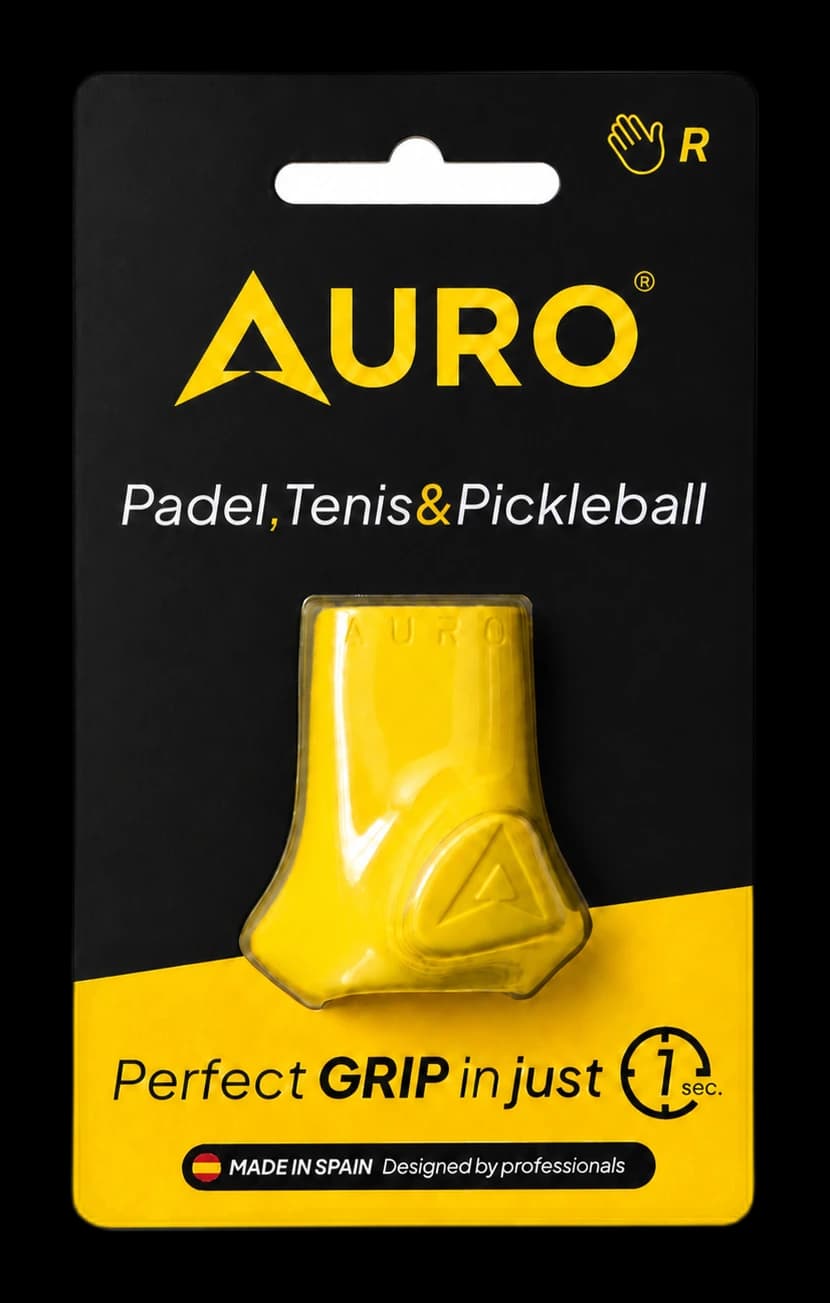
Start with the correct handed version
Auro Grip comes in right-hand and left-hand versions. Selecting the version that matches the player’s hand ensures that the product’s guide ramp is presented in the orientation prepared for that hand.
Place the guide on the handle
The product installs instantly and does not require tools. Once placed on the padel racket handle, the physical guide gives the hand a reference for finding the continental grip described by AURO.
Read Position 01 before changing it
Position 01 is the control configuration and carries the continental and precision reference. It is one of two actual product positions, not a separate accessory or an additional part to install.
Rotate for Position 02 when wanted
To reach Position 02, remove Auro Grip, rotate it 180 degrees and reinsert it. This changes which side of the handle carries the reference.
Keep the overgrip in your setup
Auro Grip guides hand position but does not replace the overgrip. It sits on top of the overgrip, which stays underneath for feel and sweat absorption.
Before the grip: how hard to hold
Many people approach holding as a strength problem and start by squeezing. The most widely used practical reference is holding just firmly enough that the racket does not move and no more, letting the hand close a little further only at contact. Starting with pressure rather than position tends to produce a tired forearm and worse feel than necessary.
Checking that your hand lands where you think
The between-points check is the most reliable because there is time to do it: drop your arm, release the racket entirely, take hold again without looking, and compare with how it felt at the start of the session. If the sensation has changed, the hand drifted during play, which is a far more common pattern than placing it wrongly from the outset.
If you come from tennis
Players arriving from tennis usually bring an automated grip change between forehand and backhand that proves less practical in padel given how little time there is at the net. The difficulty is not learning something new but unlearning something already done without thinking, which is why the process often takes longer than for someone starting fresh.
Left and right handed players are not symmetric in practice
The technical description is symmetric, but the learning experience is not always: most teaching material, videos and on-court explanations are framed from a right-handed perspective. A left-handed player has to mentally translate those references, and it is worth keeping that in mind when following any guide, this one included.
What to do when the feel suddenly worsens
If holding feels strange one day without any change to your technique, check the equipment first: a worn overgrip, a layer added recently or a different racket all alter the physical reference without any technical decision being made. Ruling that out takes a minute and avoids rebuilding a stroke that was not broken.
The first contact with the racket each day
How you pick the racket up at the start of the warm-up tends to set the tone for the whole session, because that is the reference your hand stores. Spending the first minutes placing it deliberately, rather than grabbing it however while chatting to your partner, is one of the cheapest interventions available and almost nobody does it.
What changes between warming up and competing
During the knock-up almost everyone holds the racket well: there is time, no pressure and attention to spare. The problem appears once the point matters. If things feel right in the warm-up and wrong in the match, it is not that you forget the technique: conditions differ, and the automated position beats the learned one.
The non-dominant hand counts too
Most explanations focus only on the striking hand, but the other takes part in preparation by supporting the throat of the racket and helping position it. A player who lets the free hand hang loses a useful reference for returning the racket to its starting position between shots.
AURO
Frequently asked questions
Do I need tools to install Auro Grip?
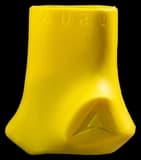
Installs instantly, with no tools This installation statement applies to the practical padel setup described here.
How do I change from Position 01 to Position 02?
Position 01 has the more pronounced reference and is the one to start with. Position 02 is reached by rotating the piece 180 degrees, which changes the orientation of the reference. The remove, rotate and reinsert sequence selects the second position.
Should I remove my overgrip permanently?
No. Auro Grip sits on top of the overgrip rather than replacing it: it guides hand position while the overgrip stays underneath for feel and sweat absorption. The guide and overgrip therefore retain separate roles on the handle.
Should I change grip between forehand and backhand?
In padel the norm is not to, because net play leaves very little time between shots. It is one of the clearest practical differences from tennis, where that change is both viable and common in baseline play.
How do I know if I am squeezing too hard?
The forearm is the clearest signal: if it fatigues after short points or your hand feels tense once you finish playing, you are probably holding more firmly than necessary throughout the point rather than only at contact.
Does my hand size matter?
It affects the thickness you will find comfortable, not the position. How you place the hand stays the same; what changes is how many layers you need over the handle to close it without squeezing and without space to spare.
Can I check my hold away from the court?
Yes, and it is one of the few things you can genuinely work on at home. Taking and releasing the racket several times without looking, checking whether the hand always lands in the same place, needs neither ball nor space and reveals how consistent your starting point is.