
Grip trainer
A physical grip reference for a tennis racket handle
Direct answer
Tennis is one of the sports supported by Auro Grip, allowing players to use the same physical hand reference, right-hand or left-hand orientation, and two-position product design on the handle.
Marco LucasAURO
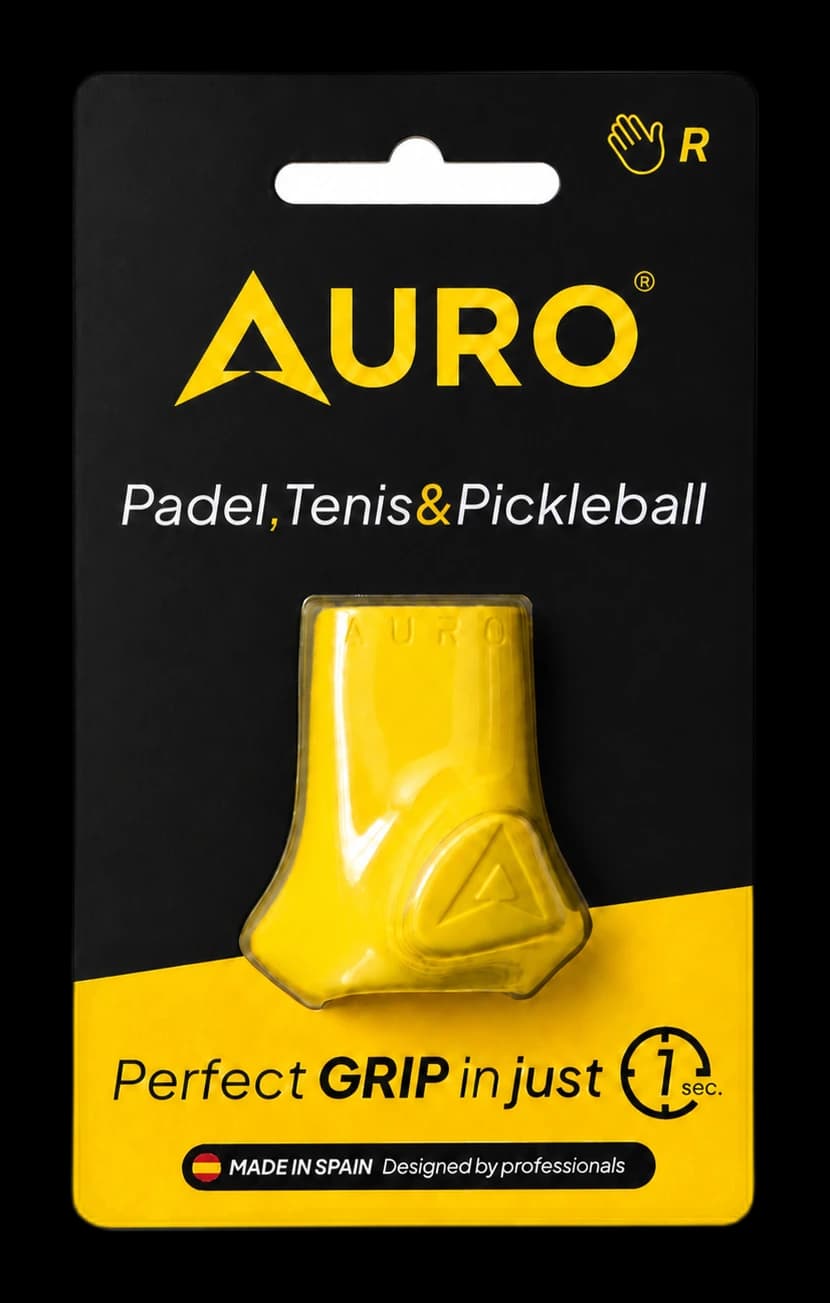
Tennis is an included AURO sport
AURO lists tennis among the sports compatible with Auro Grip, alongside padel, fronton, squash and pickleball. This guide stays focused on how the existing physical product reference carries to a tennis handle.
Use the physical ramp as the reference
The product’s purpose is to give the hand a physical guide on the handle. The right-hand and left-hand versions preserve that concept by matching the orientation of the ramp to the player’s hand.
Understand the two real configurations
Position 01 has the more pronounced reference and is the one to start with. Position 02 is reached by removing the grip, rotating it 180 degrees and reinserting it, which changes the orientation of the reference.
Keep product roles separate
Auro Grip is the hand-position guide, while an overgrip can still be used for feel and sweat absorption. The guide installs without tools and does not ask the overgrip to perform the reference function.
What tennis and padel share in holding
In both sports the continental grip appears as the reference for shots near the net and for the serve, and in both the hand needs a recognisable starting point. The underlying logic is identical: if the initial position shifts without you noticing, every shot starts from a different base and corrections become inconsistent.
Where they stop resembling each other
Tennis allows more time between baseline strokes, which makes changing grip between forehand and backhand viable and common in the modern game. Padel, with a shorter court and much more net play, penalises that change. A physical reference is therefore useful in both sports but used differently in each.
Handle sizing in tennis
Tennis racquets are manufactured in several grip sizes, which is not the case in the same way for padel. That means a tennis player may have thickness sorted by the racquet itself, whereas in padel the adjustment is almost always made with layers. Worth keeping in mind when carrying habits from one sport to the other.
What to expect when alternating between both
Playing both in the same week is common and poses no problem, though it is worth accepting that the first balls of each session will go towards readjusting. The hand needs a few minutes to recover the reference for the sport at hand, and forcing that process usually shows up as squeezing too hard through the opening games.
The serve, where it overlaps most with padel
The tennis serve is one of the strokes where the continental grip appears most consistently in any technical explanation, and the logic there is identical to padel: an intermediate position that lets you orient the racquet face without forcing the wrist. Players coming from padel often find that point more readily than other aspects of the serve.
What transfers badly between the sports
The habit of changing grip between baseline strokes, genuinely useful in tennis, becomes a liability at the padel net. Conversely, the constant firmness that works in padel can prove excessive on longer tennis groundstrokes. Neither habit is a mistake: they are adaptations to different sports.
Alternating without blending
People who play both often describe an initial phase of confusion that later fades. The hand ends up distinguishing contexts the way it distinguishes other everyday motions. What helps is not trying to correct the other sport's habits on court: each session with its own references, without dragging one into the other.
Contact material behaves differently between the sports
In tennis, overgrip wear tends to distribute differently because the serve concentrates load on a specific area of the handle. In padel, with a higher volume of short shots, wear tends to be more uniform. If you play both on the same replacement schedule, it is normal for one to ask for renewal sooner than the other.
AURO
Frequently asked questions
Is tennis listed as compatible with Auro Grip?
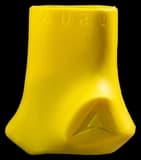
Works for padel, tennis, fronton, squash and pickleball Tennis is included in that approved compatibility list.
Does the tennis setup still have two positions?
Position 01 has the more pronounced reference and is the one to start with. Position 02 is reached by rotating the piece 180 degrees, which changes the orientation of the reference. The tennis use keeps the same two product configurations.
Is there a left-hand version for tennis players?
Yes. Auro Grip has right-hand and left-hand versions, so the ramp reference matches the player hand. That handed choice also applies when the guide is used for tennis.
Does the same product work for tennis and padel?
The logic of having a physical reference on the handle is equivalent in both sports, but check placement on each racquet separately, because handle profile and length differ and the comfortable position may end up somewhere else.
Do tennis players always use the continental grip?
Not on every stroke. It is the usual reference for serve, volley and drop shot, while on groundstrokes the modern game frequently uses more closed grips to generate additional rotation on the ball.
Can a tennis handle be adjusted like a padel one?
Partly. Racquets are made in different grip sizes, so much of the adjustment happens when choosing the model, and layers added on top serve to fine-tune rather than to resolve thickness from scratch.
Will I notice differences moving from padel to tennis?
Most people notice weight and length before grip, and find there is more time between groundstrokes than they are used to. That extra time is exactly what makes hand adjustments viable which would not pay off in padel.